

- Foundations of quantum theory in cognitive models
- The observer effect and consciousness
- Superposition and the nature of decision-making
- Entanglement and the interconnected mind
- Towards a quantum-inspired theory of thought
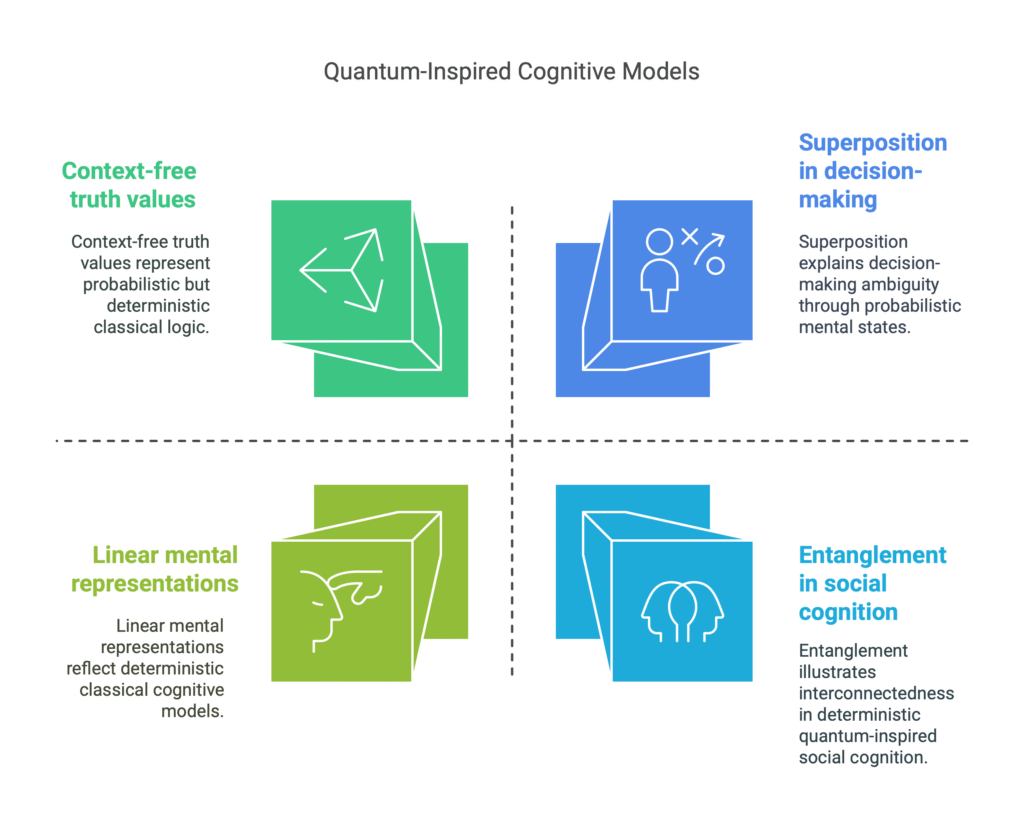
The classical model of cognition, rooted in deterministic frameworks and linear representations of mental states, has been challenged in recent years by the incorporation of principles derived from quantum mechanics. Rather than merely applying physics to the brain, these models suggest that quantum principles offer novel ways of understanding the inherent complexity and paradoxes observed in human cognition. Specifically, the probabilistic and non-classical nature of quantum mechanics provides an alternative lens through which to explore thought processes, beyond the limitations of traditional logic-based systems.
In cognitive science, researchers have increasingly found that certain phenomena—such as decision-making under uncertainty, semantic incongruity, and the context-dependent retrieval of memories—resist full explanation by classical probabilistic models. This has led to the emergence of quantum cognitive models, which adopt mathematical structures from quantum theory to account for these cognitive anomalies. For example, interference effects in decision-making, analogous to the interference patterns observed in quantum physics, can better explain violations of expected utility theory occasionally seen in human choices.
The quantum model of cognition posits that mental states exist within an abstract Hilbert space, where thoughts are not fixed until they are ‘measured’ or brought into conscious awareness. This perspective mirrors the way quantum particles are described in terms of probability amplitudes rather than concrete positions until observed. In this framework, cognitive entities such as beliefs, memories, and intentions are represented as vectors in a high-dimensional space, with probabilities derived from the squared magnitudes of projected vectors—a fundamental operation in quantum mechanics.
Moreover, this model accounts for the context-dependent nature of cognition. In classical logic, the truth of a proposition is context-free; however, in actual thought processes, the truth value or likelihood of a mental state often shifts depending on the sequence of information presented or the context in which it is considered. Quantum-inspired frameworks allow for the representation of this context sensitivity via non-commutative operations, where the order of mental operations affects outcomes—remarkably similar to how quantum measurements alter system states depending on measurement sequence.
Interdisciplinary fields such as quantum cognition and quantum neuroscience are beginning to formalise these ideas, integrating mathematical tools from quantum theory into models of mental function. These approaches seek not to assert that quantum phenomena like entanglement or tunnelling occur in the biological substrate of the brain, but rather to use the abstract mathematical language of quantum mechanics as a more sensitive tool for capturing the fluid and often paradoxical nature of cognition. Such developments challenge the long-established dualism between rational analysis and emotional response, suggesting instead that human thought is inherently probabilistic, contextual, and dynamically structured—hallmarks of a quantum-informed understanding of mind.
The observer effect and consciousness
A key tenet of quantum mechanics is the observer effect: the notion that the act of observation fundamentally influences the state of a quantum system. In cognitive contexts, this concept has been mirrored by discussions around consciousness and subjective awareness. The parallels drawn here are not merely metaphorical but are part of a growing field seeking to model aspects of human cognition—as well as potential mechanisms of consciousness—through quantum-inspired frameworks. In this regard, consciousness is not seen as a passive receiver of information; instead, it plays an active role in shaping mental states, not unlike how measurement collapses a quantum wave function.
When applied to thought processes, the observer effect suggests that attention or intentional focus can function as a kind of ‘measurement’ that collapses a multitude of cognitive possibilities into a singular awareness. This reflects a departure from traditional cognitive models where observation or awareness is neutral. Quantum-inspired models posit that the very act of cognising—of consciously attending to a thought, perception, or memory—may influence the trajectory and composition of mental states. Such frameworks suggest that cognition is not independent of consciousness but deeply intertwined with it, shaped by ongoing internal ‘observations’ that reduce mental possibilities to moments of clarity or choice.
Emerging theories in neuroscience also entertain the possibility that specific neural activities associated with conscious states exhibit complex dynamics that resist purely classical description. Some researchers propose that microtubule structures within neurons could support quantum-like processes, although these hypotheses remain controversial and largely unconfirmed. Nonetheless, the crucial insight remains: cognitive phenomena demonstrate sensitivity to context and observation, aligning them more closely with the probabilistic, observer-influenced domain of quantum mechanics than with deterministic classical systems.
Furthermore, there is a philosophical dimension to this parallel. Just as an observer in quantum mechanics cannot passively acquire information without affecting the system under observation, a conscious mind cannot observe its inner world without reshaping it. This renders the mind a participatory system, where consciousness is not a bystander but a source of alteration. Thoughts observed are altered by the very act of being brought into conscious awareness, a process that underpins introspection, reflection, and decision-making. Such a view reframes cognition not as a linear progression of computation but as a dynamic interplay between unconscious potentials and conscious selection—akin to the probabilistic evolution and collapse within a quantum system.
This reframing also opens new avenues for understanding phenomena such as the observer’s bias, cognitive dissonance, and even aspects of meditation. When one attempts to quiet the mind, as in meditative practice, one effectively alters the observer’s role—shifting from active measurement to passive awareness. This could be interpreted, in quantum-cognitive terms, as a suspension of the collapse process, allowing mental states to remain in superposed possibilities longer, unbound by immediate resolution. Such interpretations remain speculative but offer a compelling narrative for the complex entanglement between observation, awareness, and mental reality.
Superposition and the nature of decision-making
In classical models of decision-making, individuals are assumed to hold clearly defined preferences, weighing options in a linear fashion to arrive at a single rational choice. However, a growing body of research in cognition and behavioural neuroscience challenges this notion, revealing that decisions often emerge from a more ambiguous mental state, in which multiple alternatives coexist prior to commitment. This ambiguity bears a striking resemblance to the principle of superposition in quantum mechanics, where a system exists in multiple potential states simultaneously until measured. In cognitive terms, the mind holds various choice potentials in parallel, only converging on a selection when forced by context or conscious deliberation.
Superposition within thought processes offers an elegant explanation for many paradoxes in human cognition, such as the hesitation experienced when facing conflicting values, or the way preferences can reverse depending on framing. Rather than suggesting indecisiveness as a flaw, the quantum-inspired perspective frames it as a natural consequence of the brain’s ability to entertain superposed cognitive states. A decision is not merely the conclusion of a logical computation, but the collapse of a superposed mental state into a definite outcome, triggered by contextual cues or internal evaluations. This collapse mirrors quantum measurement, where observing a system ceases its potentialities and forces it into a definite state.
Empirical studies support this view by demonstrating how sequences of questions can meaningfully alter respondents’ answers—a violation of the classical assumption of order invariance. For example, asking someone about their satisfaction with life before inquiring about their employment status yields a different emotional outcome than reversing the sequence. This order effect aligns with non-commutative cognitive operations, a hallmark of quantum mechanics, suggesting that mental states evolve in a way that defies classical predictability. The mental ‘superposition’ of attitudes, beliefs, and desires is susceptible to the sequence and framing of information, not just the content itself.
Neuroscience contributes additional depth to this model. Studies of neural substrates involved in decision-making, particularly within the prefrontal cortex, reveal activity patterns that do not correspond to clearly delineated preferences but instead show concurrent activation across networks representing conflicting alternatives. Rather than encoding stable decisions, the brain appears to juggle multiple options simultaneously before selecting one. This neural ambiguity supports the idea that choices are snapshots from a landscape of potentialities, resolved into actualities through processes akin to quantum collapsing dynamics influenced by attention and context.
Furthermore, the superposition framework accounts for the suddenness and unpredictability with which choices can emerge. A person deliberating over complex ethical dilemmas might seem caught in indecision for hours or days, only to reach clarity in a fleeting moment. This mental ‘collapse’ from cognitive multiplicity to singular decision mirrors a phase transition, in which prolonged tension tips a dynamic system into a settled state. From the perspective of quantum cognition, the resolution of thought is not a gradual accumulation of probability but a discontinuous leap from potential to actual, echoing the quantum leap observed in subatomic systems.
While the biological mechanisms enabling such psychological superpositions remain speculative, the conceptual utility of quantum mechanics in modelling these processes is increasingly compelling. Traditional computational models of the mind struggle to accommodate the fluidity, reversibility, and contextual malleability seen in human decision-making. In contrast, the principles derived from quantum theory offer a language and structure that resonates more closely with lived cognitive experiences—an architecture of thought where multiple futures coexist, and where choices emerge not solely from calculation, but from the interplay of awareness, context, and mental potentialities in superposition.
Entanglement and the interconnected mind
One of the most striking parallels between quantum mechanics and human cognition is the concept of entanglement—a phenomenon in which particles become so deeply linked that the state of one cannot be described independently of the state of the other, regardless of the distance between them. In a similar way, the mind appears to function not as an isolated collection of independent thoughts, but as an interconnected network in which mental states can exert influence across cognitive domains. This kind of mental entanglement speaks to the embeddedness of ideas, emotions, memories, and perceptions within a larger system of associative and non-local relationships within the brain.
In the realm of cognition, entanglement may provide a useful metaphor, and potentially even a mathematical framework, for understanding how thoughts and experiences are often correlated in unexpected, holistic ways. For instance, recalling a single emotionally charged memory can sharply alter the emotional tone of unrelated thoughts or influence decision-making across seemingly disconnected domains. Such interactivity challenges classical cognitive models, which typically conceptualise thoughts as discrete units linked only by direct associations. A quantum-inspired understanding sees the mind as a system where mental states exist in complex relational coherence, affecting each other instantaneously without requiring direct causal pathways.
Empirical research in neuroscience supports this non-local notion of connection. Studies using functional magnetic resonance imaging (fMRI) and electroencephalography (EEG) reveal patterns of synchronous neural activity across disparate brain regions when individuals engage in introspection, social cognition, or recall of autobiographical memories. These distributed activations suggest that the brain processes information in a pattern-based, holistic manner that resembles entangled states rather than isolated bits of data. Such findings help reinforce the view of human thought processes as being naturally predisposed toward integrated, context-sensitive processing—a hallmark of entanglement as conceptualised in quantum mechanics.
Moreover, interpersonal cognition exhibits patterns that strikingly resemble entangled systems. In social cognition—the mental process of interpreting, predicting, and responding to the intentions or emotions of others—individuals often demonstrate rapid, intuitive understanding of other minds, sometimes before any concrete information has been exchanged. This phenomenon, often labelled as empathy or social synchrony, suggests that human minds might be cognitively entangled through shared experiences, language, cultural narratives, or emotional resonance. While such entanglement remains metaphorical rather than literal in the quantum physical sense, the conceptual framework helps illuminate the immediacy and depth of human interpersonal understanding.
The role of entanglement in internal psychological states is also evident in phenomena such as cognitive dissonance, where conflicting beliefs or desires exert mutual influence, leading either to distortion or integration of previously held views. Rather than treating these conflicts as faulty logic, the quantum-cognitive approach recognises them as signs of mental systems trying to reconcile multiple entangled elements under the influence of new information or internal reconsideration. This allows for a model of the mind where belief systems, memories, and choices are never fully isolated but instead co-evolve, shifting in relation to one another through mechanisms not unlike the transformation of entangled quantum systems.
Intriguingly, developmental psychology and social neuroscience offer further support for the reality of the interconnected mind. Early attachment experiences, for instance, have been shown to entangle emotional and cognitive developmental pathways throughout an individual’s lifespan. Neural circuits formed through early social bonding retain influence over identity construction, emotional regulation, and memory retrieval well into adulthood. This enduring interconnectedness challenges reductionist accounts of cognition and invites more holistic, emergent models. Quantum mechanics, by offering a language for describing non-separable relationships and dynamic correlations, helps articulate these interdependencies not as anomalies, but as essential features of complex systems like the human mind.
In utilising entanglement as a cornerstone concept, a quantum-inspired theory of cognition does not claim the brain is subject to quantum entanglement at the microscopic level, though such explorations exist within fringe hypotheses of quantum neuroscience. Rather, it posits that human thought processes, by their very nature, reflect patterns of inseparability, contextuality, and co-dependence that align more closely with quantum models than with classical frameworks. In doing so, it opens up new avenues for understanding everything from collective identity to decision-making behaviour, grounded in an architecture where connectivity overrides isolation, and where meaning emerges through relation rather than position.
Towards a quantum-inspired theory of thought
Building on the conceptual parallels between quantum mechanics and human cognition, recent models propose a new architecture of thought—one that integrates the probabilistic nature of quantum systems into the very structure of mental functioning. These models do not claim that thought processes literally follow quantum phenomena such as superposition or entanglement at the physical level, but rather that the abstract formalism used in quantum theory provides an effective metaphorical and mathematical language for describing how the mind navigates ambiguity, context, and complexity. Instead of viewing such quantum-inspired models as mere analogies, researchers are increasingly formalising them into testable cognitive frameworks that yield novel insights into the way the human brain processes information.
In these frameworks, thinking is envisioned not as a deterministic computation arising from fixed mental representations, but as a dynamic evolution within a cognitive Hilbert space, where mental states transition fluidly under the influence of observation, context, and internal coherence. Here, probability is no longer a by-product of ignorance or incomplete information, as in classical models, but an intrinsic feature of mental processing. Quantum mechanics introduces probability as fundamental to physical systems; similarly, this quantum-inspired cognitive model portrays uncertainty not as a failure of judgement but as a core characteristic of how cognition functions in realistic, complex environments.
One striking advantage of this modelling approach lies in its treatment of ambiguity and contradiction within thought processes. Traditional binary logic often fails to accommodate the internal contradictions that characterise much of human psychology, such as holding conflicting desires or beliefs simultaneously. In contrast, in a quantum-inspired paradigm, such contradictions exist in coherent superposition until resolved or contextualised by new experiences or introspection. This enables a richer depiction of internal mental life, where belief systems, identity, and emotions fluctuate and co-reside within a probabilistic, evolving mental landscape.
Moreover, these models underscore the fundamental role of context sensitivity in cognition. Just as measurement in quantum physics changes the state of the observed system, the framing of a question, the sequence of thoughts, or even the interaction with a conversational partner can all alter the ‘state’ of a person’s cognition. This non-commutative property of thought—where the order of mental operations changes outcomes—demands cognitive theories that move beyond static representations to embrace the inherently dynamic and contingent nature of mental activity. Quantum-inspired models, drawing on the algebra of observables and operators, offer precisely this flexibility.
Neuroscience contributes to this perspective by revealing distributed, non-linear patterns of brain activity that correlate with higher-order cognitive tasks like decision-making, memory retrieval, and imaginative projection. While neural substrates may not operate via literal quantum processes, their interactions frequently display behaviours that defy the assumptions of classical computation. For instance, predictive coding and neural synchronisation indicate a brain that operates via inference, updating, and recontextualisation—hallmarks of a system adapting to continual flux and ambiguity. The statistical structures used in quantum mechanics can effectively describe such updates, capturing the constructive, rather than merely reactive, nature of perception and thought.
Furthermore, this emerging theory of thought offers exciting implications for understanding creativity, insight, and intuition. These phenomena often appear sudden or inexplicable under traditional cognitive models, which prize linear reasoning and deterministic rules. The quantum-inspired framework, however, allows for the coexistence of hidden, competing mental potentials, resolving into solutions only under specific cognitive pressures or novel associations—a cognitive analogue to the probabilistic ‘collapse’ seen in quantum measurements. This suggests a more generative and flexible model of thinking, one capable of uniting analytical reasoning with the spontaneity of creative thought.
In educational psychology and therapeutic practice, such a theory could revolutionise our approach to learning and mental health. An understanding of thoughts as context-dependent and probabilistic may lead to interventions that focus less on ‘correcting’ faulty thinking in rigid terms, and more on illuminating the underlying structures of ambiguity, contradiction, and potentiality. Mental wellbeing could be reframed as the ability to navigate these superposed cognitive spaces with awareness and adaptability, much as quantum systems are understood not in terms of fixed trajectories but evolving states of possibility.
Though this quantum-inspired approach to cognition remains in its formative stages, its potential for unifying diverse strands of psychological theory is compelling. It accommodates the richness of subjective experience, the complexity of neural interactions, and the enigmatic features of human thought that have long puzzled behavioural science. By drawing from the conceptual toolkit of quantum mechanics, this paradigm invites a reimagining of cognition as a non-linear, context-sensitive, and inherently transformative process—an architecture of mind built not from fixed rules, but from dynamic relations, probability amplitudes, and the ever-shifting currents of conscious awareness.
